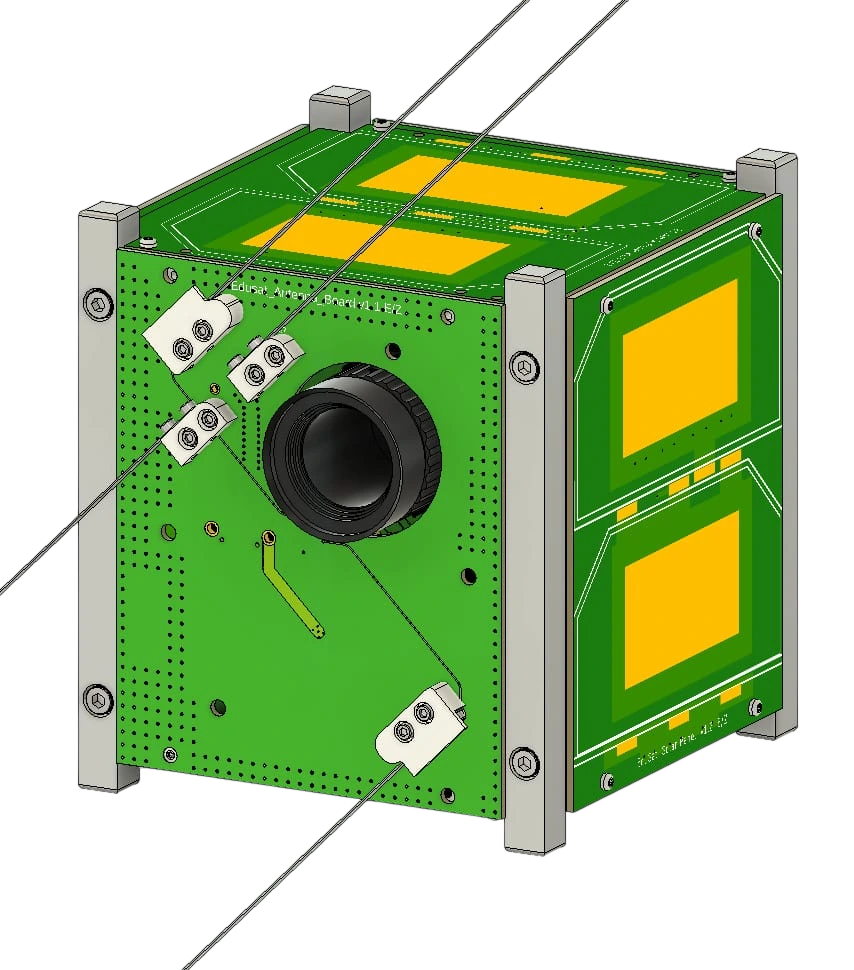
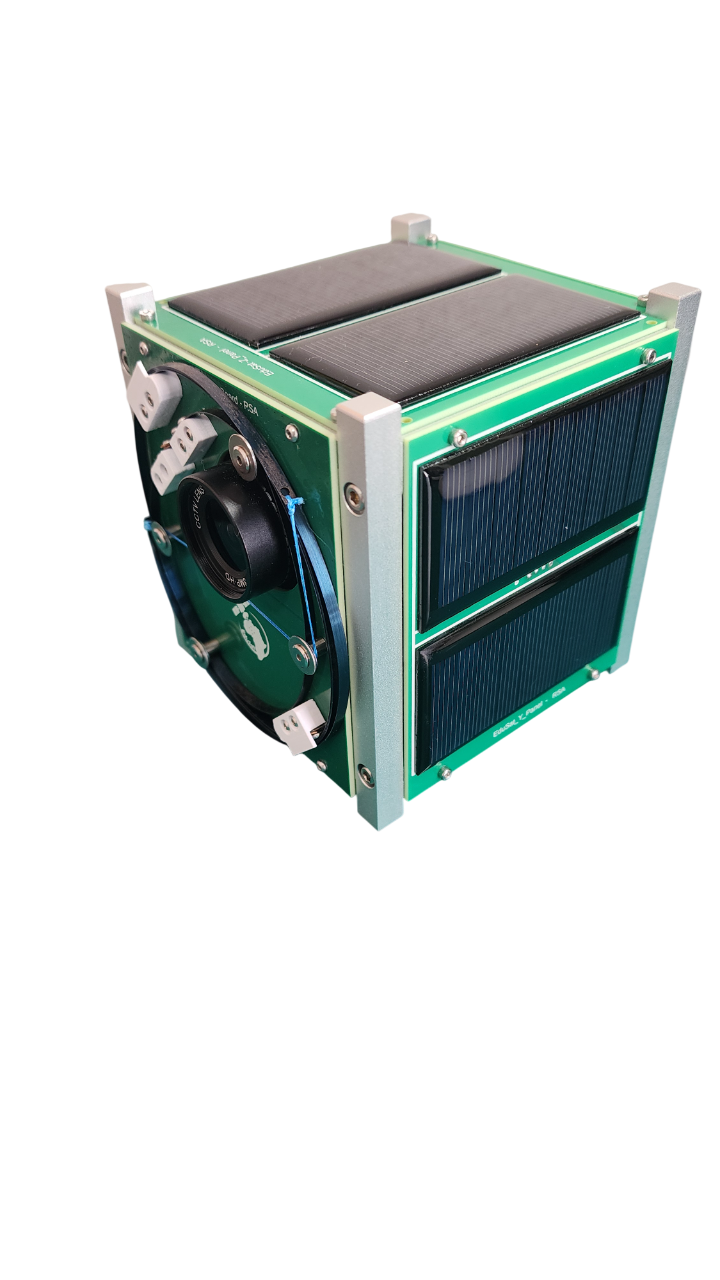
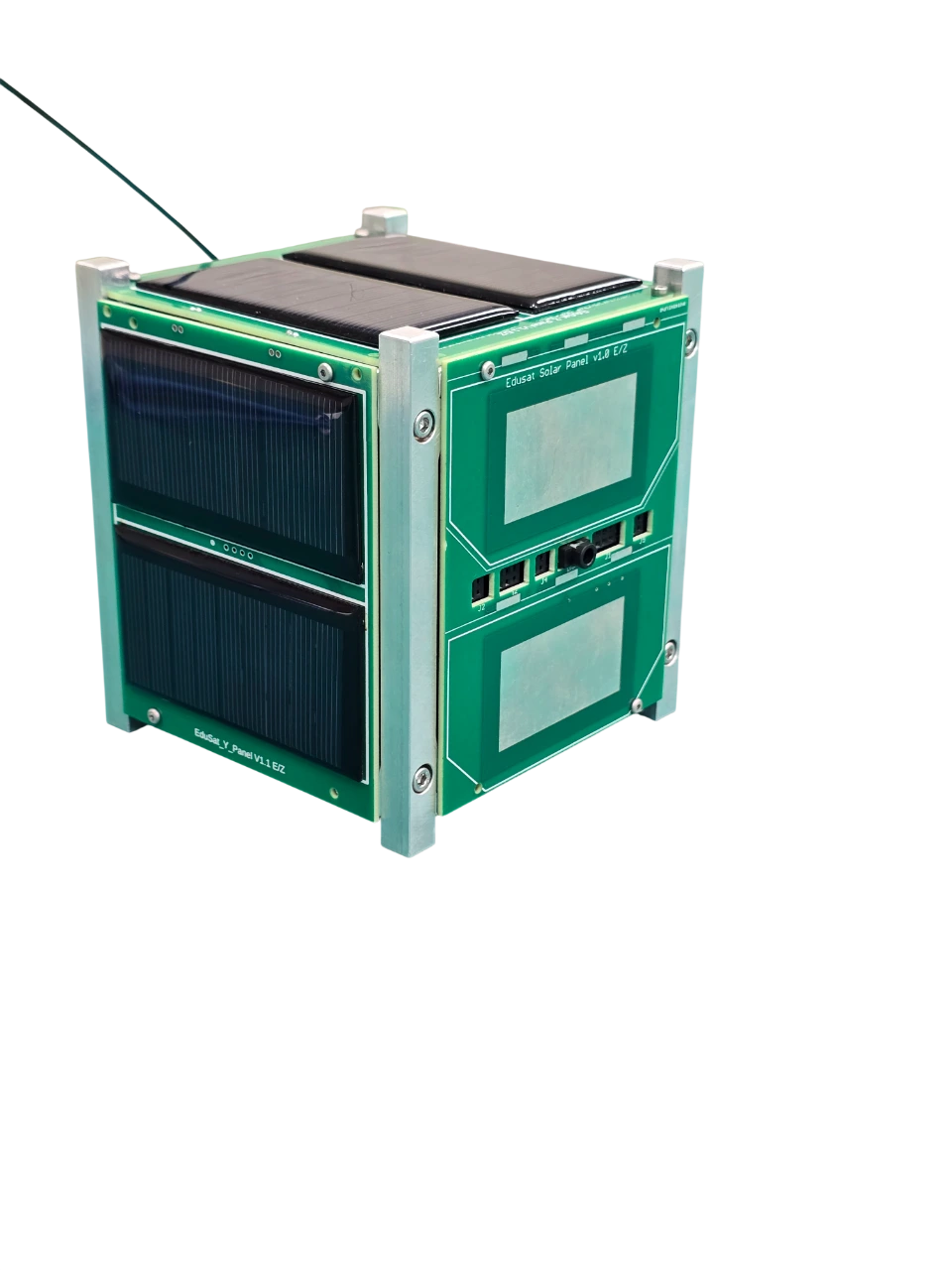
Indigenous space-grade cubesat platform and mission design.
🛰️ CubeSat Systems Training
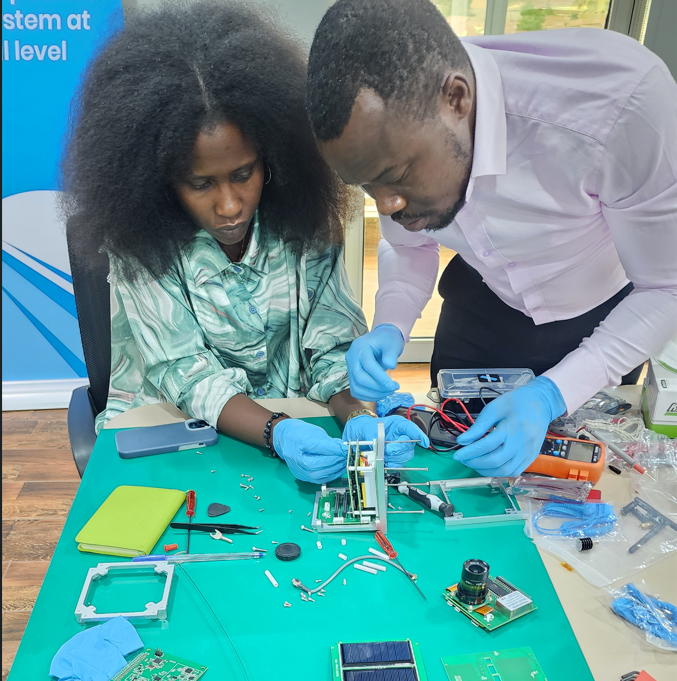
Hands-On Satellite Engineering
Subsystem integration, embedded firmware, RF link validation, and mission operations—built on real hardware.
🚀 Standards & Space Heritage
Development of Flight-ready Upstream Sub-systems
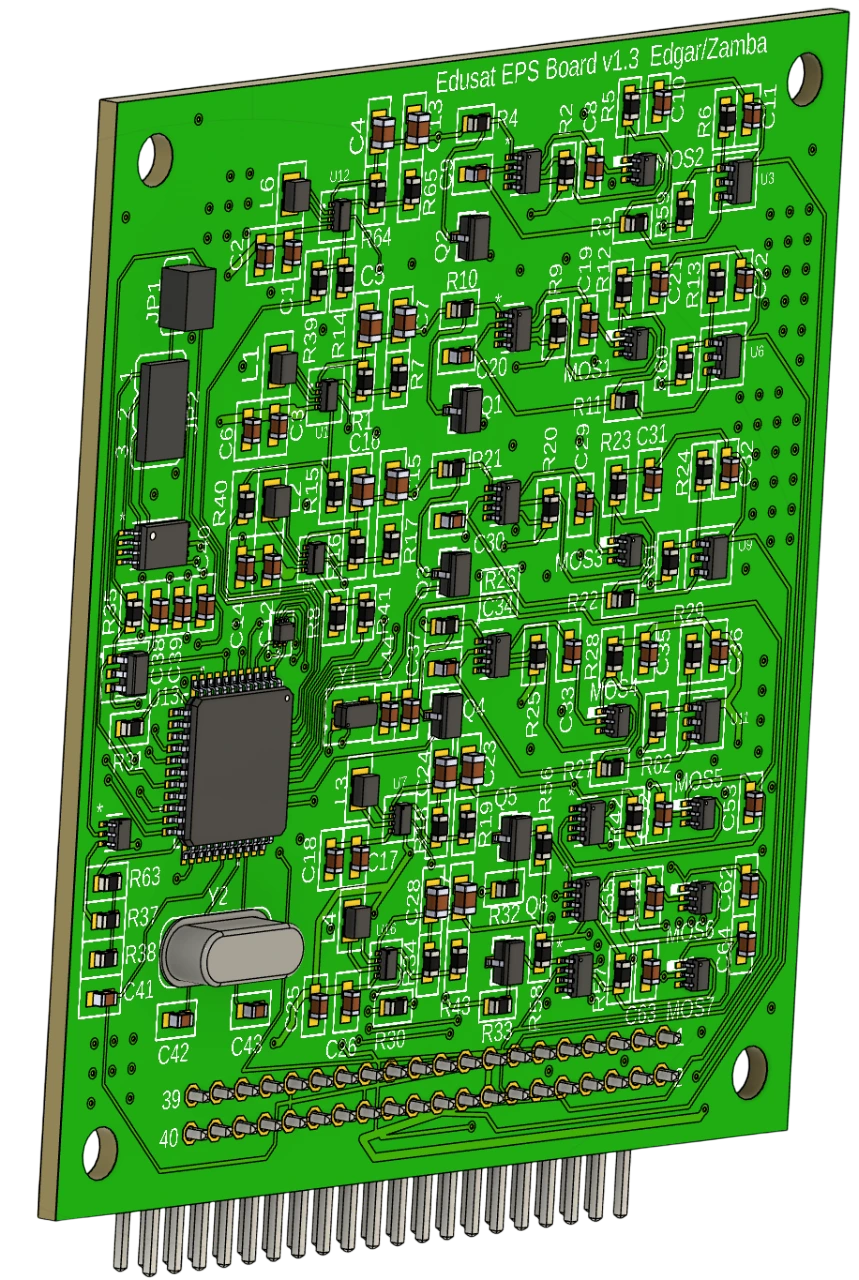
Electrical power system(EPS), On-board Computer(OBC), Communication Systems (COMs), Mission Payload & Flight Software.
🛰️ Mission Control & TT&C
Operational Satellite Communications
End-to-end ground segment engineering with SDR integration, Doppler-aware tracking, telemetry decoding, and operations support.
🤝 Institutional Capacity
Build Sovereign Space Capability
Technology transfer, curriculum enablement, and systems engineering training to accelerate national space readiness.
The Challenge & Opportunity
The Problem
Many African institutions lack access to fully integrated satellite engineering ecosystems.
While theoretical aerospace curricula exist, few universities possess subsystem-level platforms enabling EPS validation,
OBC firmware development, RF link testing, integration workflows, and mission operations simulation.
This results in graduates with limited exposure to system integration, hardware debugging, power budgeting,
RF link analysis, and mission readiness verification.
Limited CubeSat laboratory infrastructure and verification tools
High cost of space-grade components and test equipment
Insufficient subsystem interface knowledge and documentation
Low availability of flight-representative benchmarking platforms
Our Solution
AfriSpace Labs delivers a modular CubeSat training and prototyping platform that replicates real satellite development workflows.
Institutions deploy a complete hardware-software ecosystem for subsystem integration, RF validation,
telemetry handling, payload interfacing, and end-to-end ground segment verification.
Subsystem-level EPS, COM, OBC, and payload integration kit
Embedded firmware workflows, telemetry protocols, and mission data handling
SDR-enabled ground segment integration and link verification
Structured curriculum, documentation, and institutional mentorship
Strategic Goals
How we're transforming African satellite engineering capacity
🛰️
Indigenous Space Missions
Enable African institutions to develop and validate CubeSat missions through subsystem engineering,
verification planning, and progressive technology maturation pathways.
🏫
Strengthen Institutions
Establish CubeSat laboratories in universities and TVETs, supporting hands-on subsystem integration,
testing, documentation discipline, and mission operations training.
🌍
Build Innovation Ecosystems
Grow networks connecting academia, industry, and government to develop sustainable space manufacturing,
operations capability, and indigenous satellite programs.
📡
Practical Benchmarking
Provide flight-representative platforms for performance benchmarking, interface testing, RF validation,
and rapid prototyping under real system constraints.
Systems Engineering Philosophy
Training engineers to design for interfaces, constraints, and verification
AfriSpace Labs adopts a systems engineering-driven approach aligned with modern CubeSat development practice.
Training emphasizes requirement definition and traceability, interface control documentation (ICDs),
power and mass budgeting, failure mode awareness, integration and verification planning,
and ground-segment operational validation—ensuring students learn how real spacecraft are engineered, not just assembled.
AFRICAN SPACE SYSTEMS | UPSTREAM ENGINEERING
About AfriSpace Labs
Engineering Africa’s sovereign access to space through indigenous satellite systems,
mission-grade subsystem development, and institutional capability transfer.
Who We Are
Africa’s upstream satellite engineering company and capability accelerator
AfriSpace Labs is an African space systems company building the foundation for a
self-reliant upstream space ecosystem through the development of
flight-representative CubeSat platforms (1U–3U),
mission-ready subsystems, and structured engineering training programs for
universities, government institutions, and emerging space organizations.
Our technical focus spans Electrical Power Systems (EPS),
On-Board Computers (OBC),
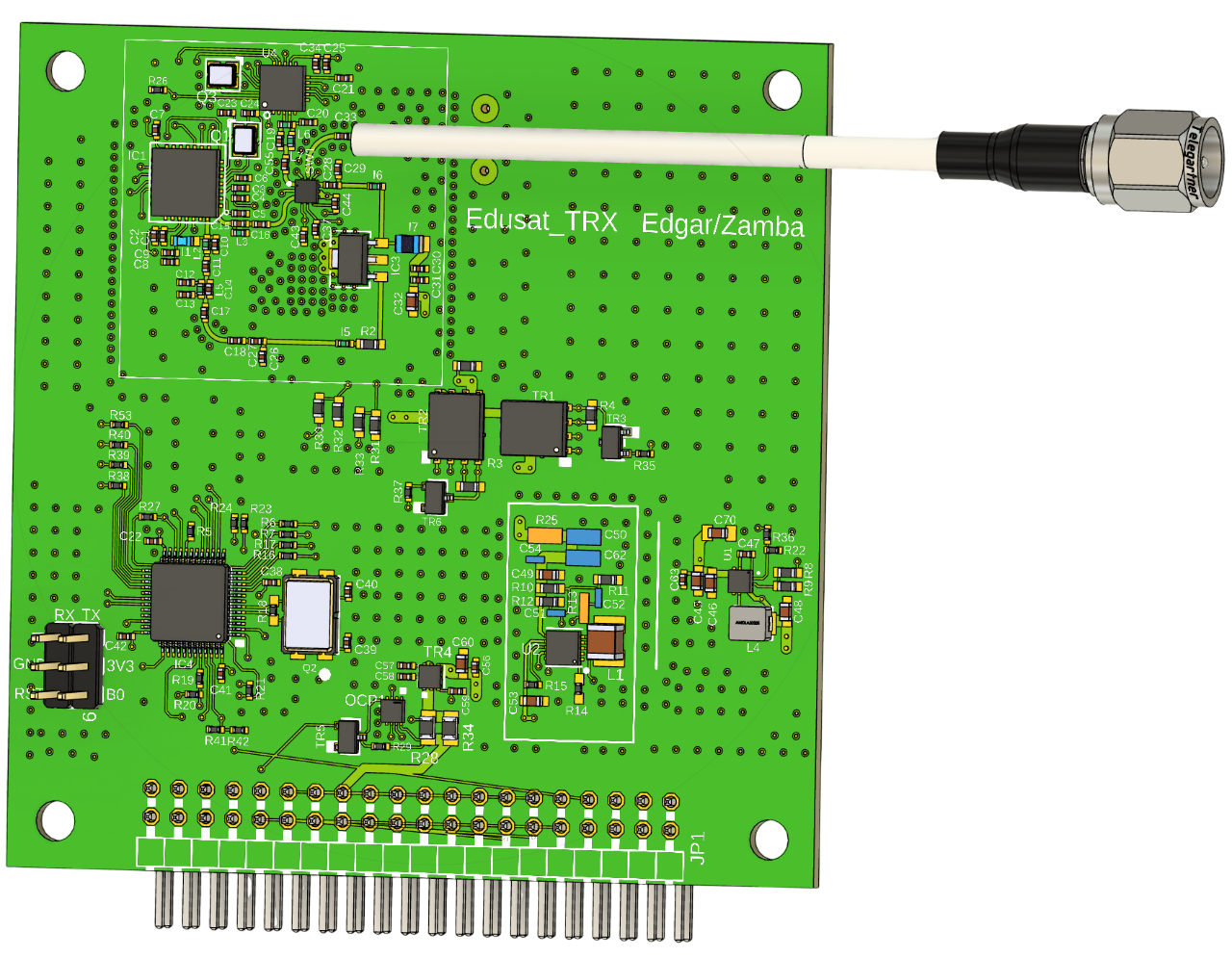
UHF/VHF Communications,
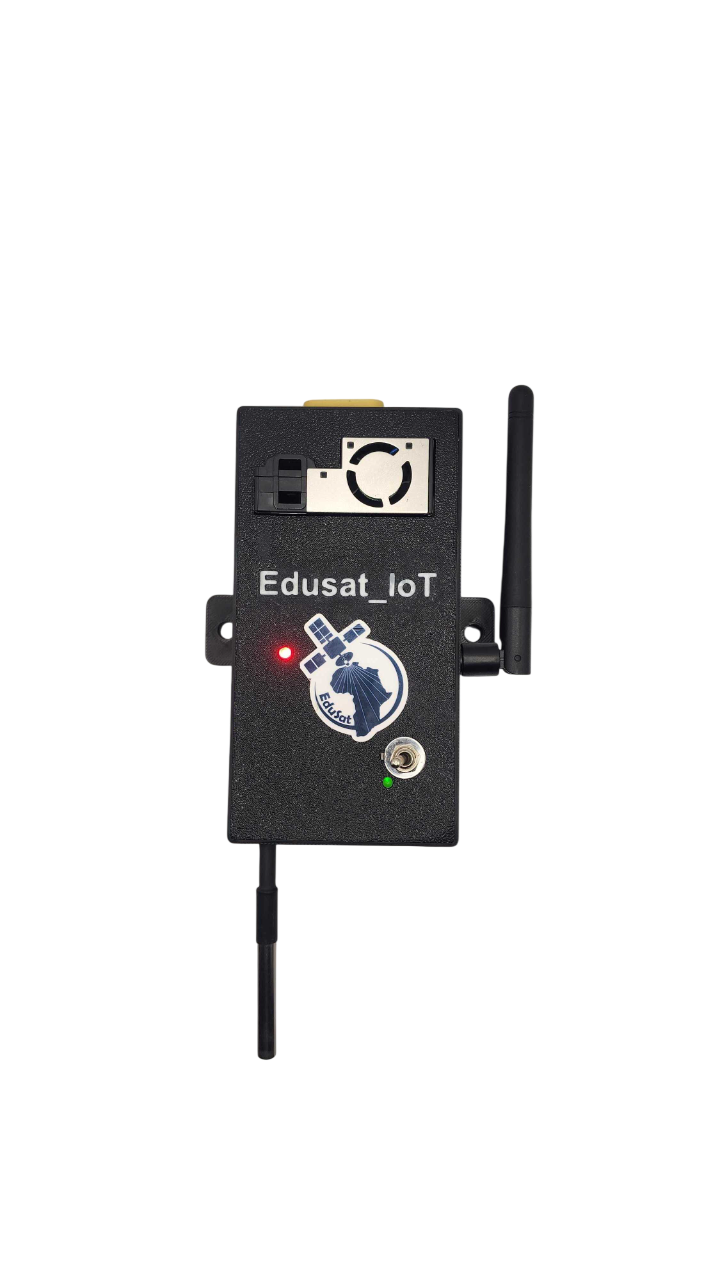
payload integration for EO, IoT, LoRa, and APRS missions,
backplane architectures,
deployable antenna systems, and
ground segment development and integration.
We engineer platforms for a seamless transition from
Engineering Model (EM) to
Flight Model (FM) readiness—reducing redesign cycles,
accelerating subsystem maturation, and enabling scalable, repeatable mission
development across African institutions.
1U–3U Modular CubeSat PlatformsMission-Grade SubsystemsGround Segment IntegrationInstitutional Capacity Building
Our Mission
What drives our engineering, partnerships, and capability-building approach
🎯 Deliver Flight-Representative Training
Build CubeSat training platforms that reflect real mission constraints—interfaces,
power budgets, verification discipline, and RF operations—while remaining accessible
to African institutions.
🤝 Enable Strategic Partnerships
Connect universities, research laboratories, industry, and public institutions to
accelerate local manufacturing, collaborative mission development, and operational growth.
📚 Transfer Institutional Capability
Provide subsystem documentation, interface definitions, firmware workflows, and mentorship
so institutions build internal engineering competence rather than long-term dependence.
🚀 Catalyze African Space Impact
Support indigenous missions and applied space solutions in environmental monitoring,
connectivity, resilience, and scientific advancement through practical satellite
engineering pathways.
What Makes Us Different
Not training alone. Not hardware alone. Full mission capability.
AfriSpace Labs combines hardware development,
system integration, and
structured technical training to help institutions build,
test, and operate real satellite systems with confidence.
Our model enables indigenous engineering ownership,
repeatable mission development pipelines, and the progressive
establishment of local AIT and operational capability across Africa’s growing space sector.
Meet the Team
Satellite professionals dedicated to African space innovation
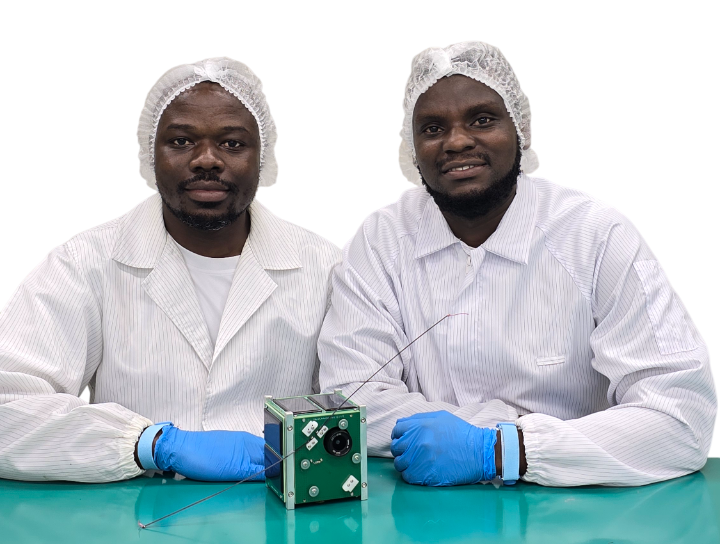
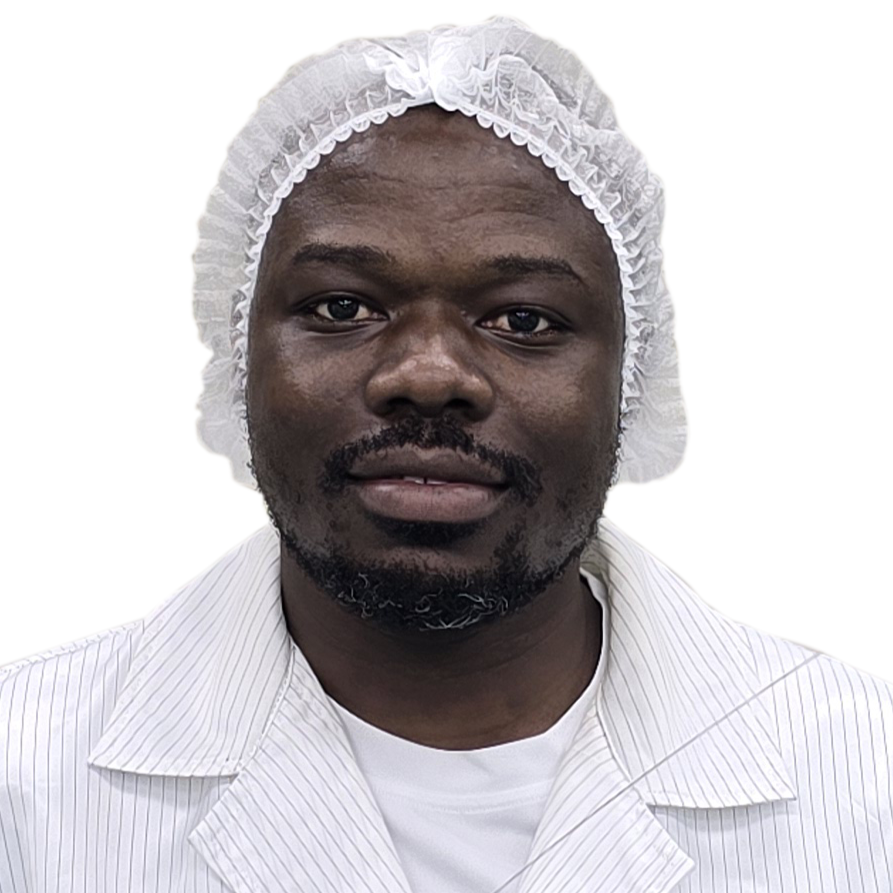
Eng. Edgar Mujuni
Founder & CTO
Space Systems Engineer and PhD researcher at the Kyushu Institute of Technology (Kyutech),
specializing in satellite systems and mission development — driving the development of homegrown satellite
platforms, mission-grade training systems, and institutional space engineering capability
for Africa's growing upstream ecosystem.
Eng. Zamba Leonel
Co-Founder & Director
Space Systems Engineer with a Master's in Space Systems Engineering from Kyushu Institute of Technology(Kyutech),
delivering high level subsystem development, integration workflows, and technical execution that strengthen African
capacity in satellite engineering and mission implementation.
Get In Touch
Let’s discuss deploying a flight-representative CubeSat engineering platform and curriculum at your institution.
Contact Us
Partnerships, technical inquiries, and student training programs
For Institutional Partnerships
Universities, TVETs, research labs, and space agencies — let’s deploy CubeSat laboratory capability and mission-grade training at your organization.
Email: info@afrispacelabs.com
For Technical Inquiries
Questions about subsystem interfaces, EPS/OBC/COM integration, firmware workflows, or RF/ground station validation?
Email: info@afrispacelabs.com
For Student Programs
Workshops, hands-on CubeSat training cohorts, student competitions, and mission operations bootcamps.
Email: info@afrispacelabs.com
Ways to Partner With Us
Different pathways for different institutional objectives
🎓 Educational Partnership
Integrate a subsystem-level CubeSat platform into your curriculum with hardware, software, curriculum content, and long-term support.
🔬 Research Collaboration
Use the platform for prototyping, validation, and applied research—co-develop payloads and subsystems aligned with your research priorities.
🚀 Mission Support
Develop and operate indigenous missions with support in architecture, integration, RF/TT&C, and operations readiness verification.
🏭 Manufacturing & Industry
Co-develop and manufacture CubeSat components and subsystem modules to grow local space hardware capability.
EduSat Project
A modular CubeSat training and prototyping platform for subsystem engineering, verification, and mission operations readiness.
What’s EduSat
A flight-representative CubeSat engineering ecosystem for Africa
EduSat is a modular CubeSat training and prototyping platform engineered to simulate real-world spacecraft development workflows within an educational environment.
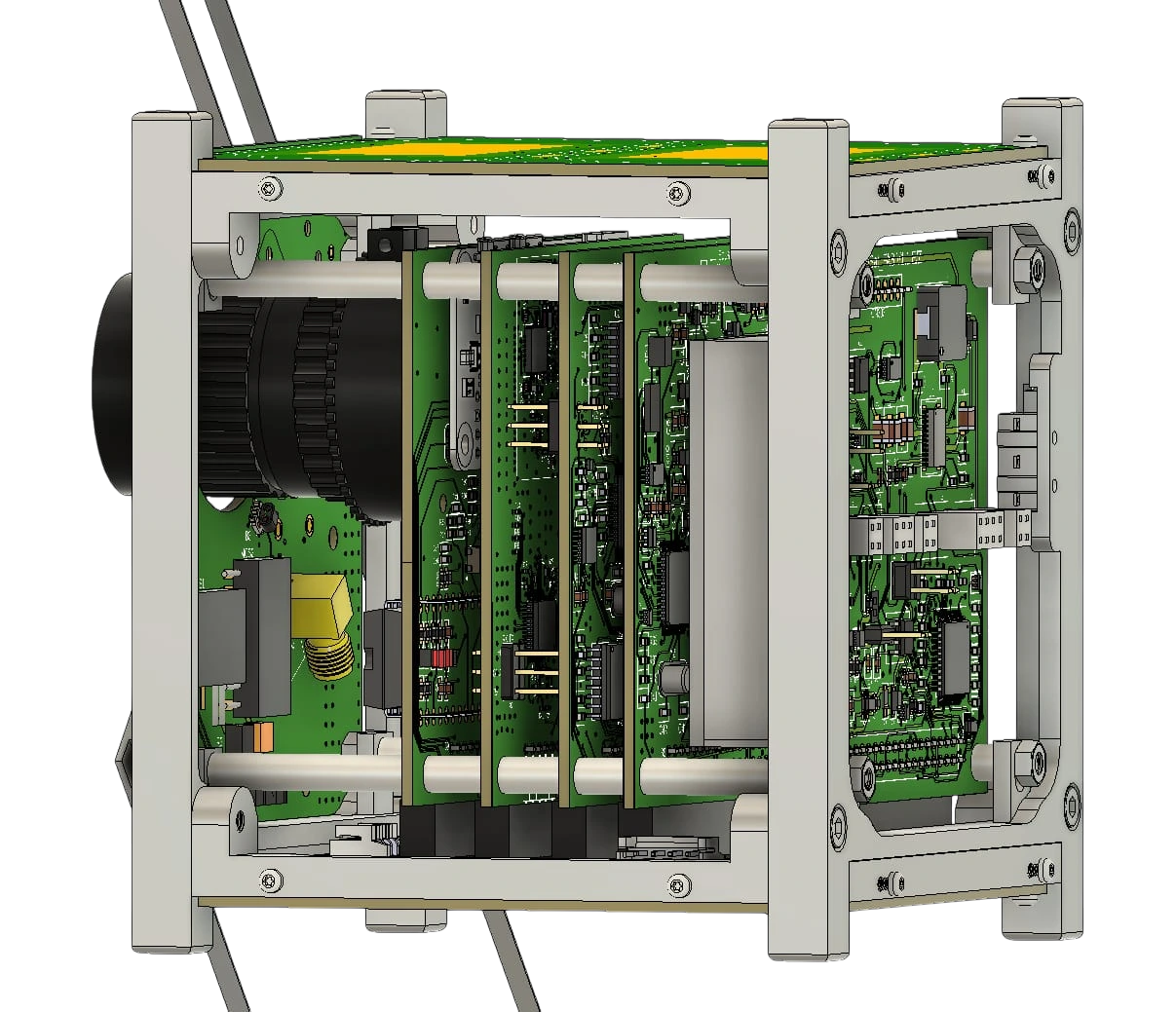
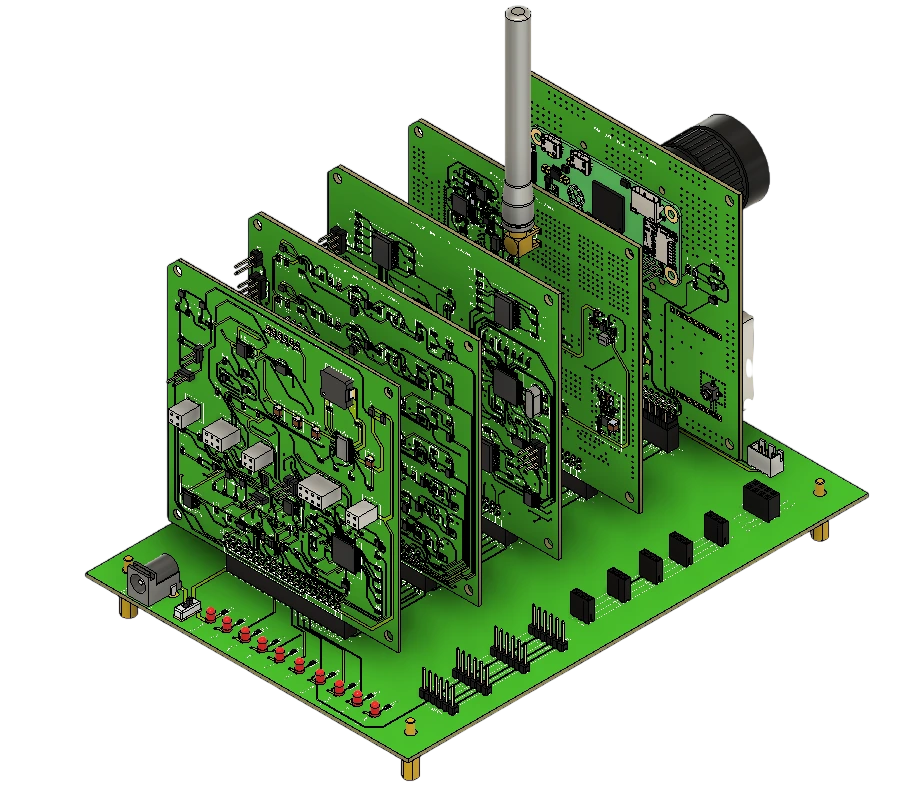
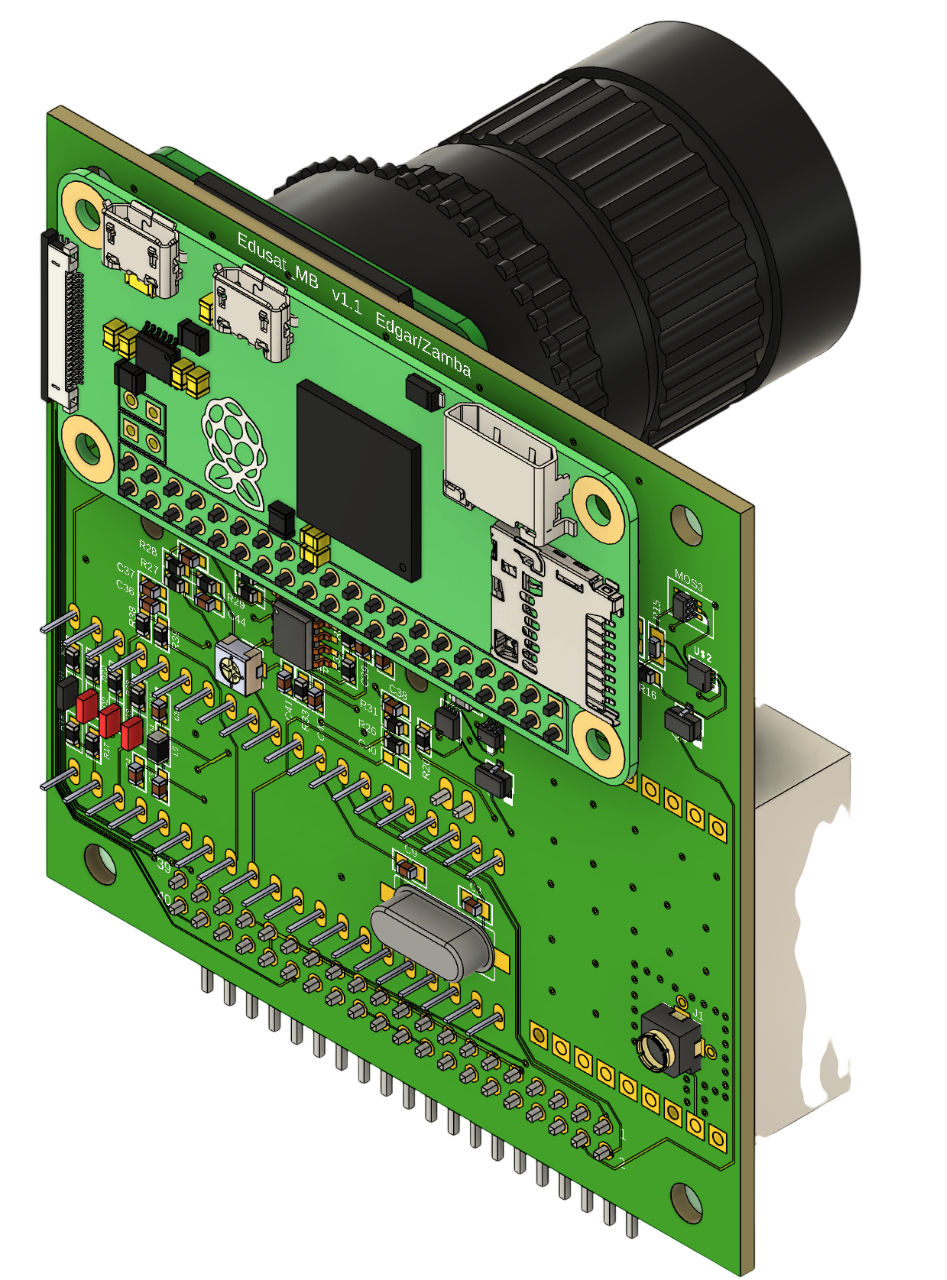
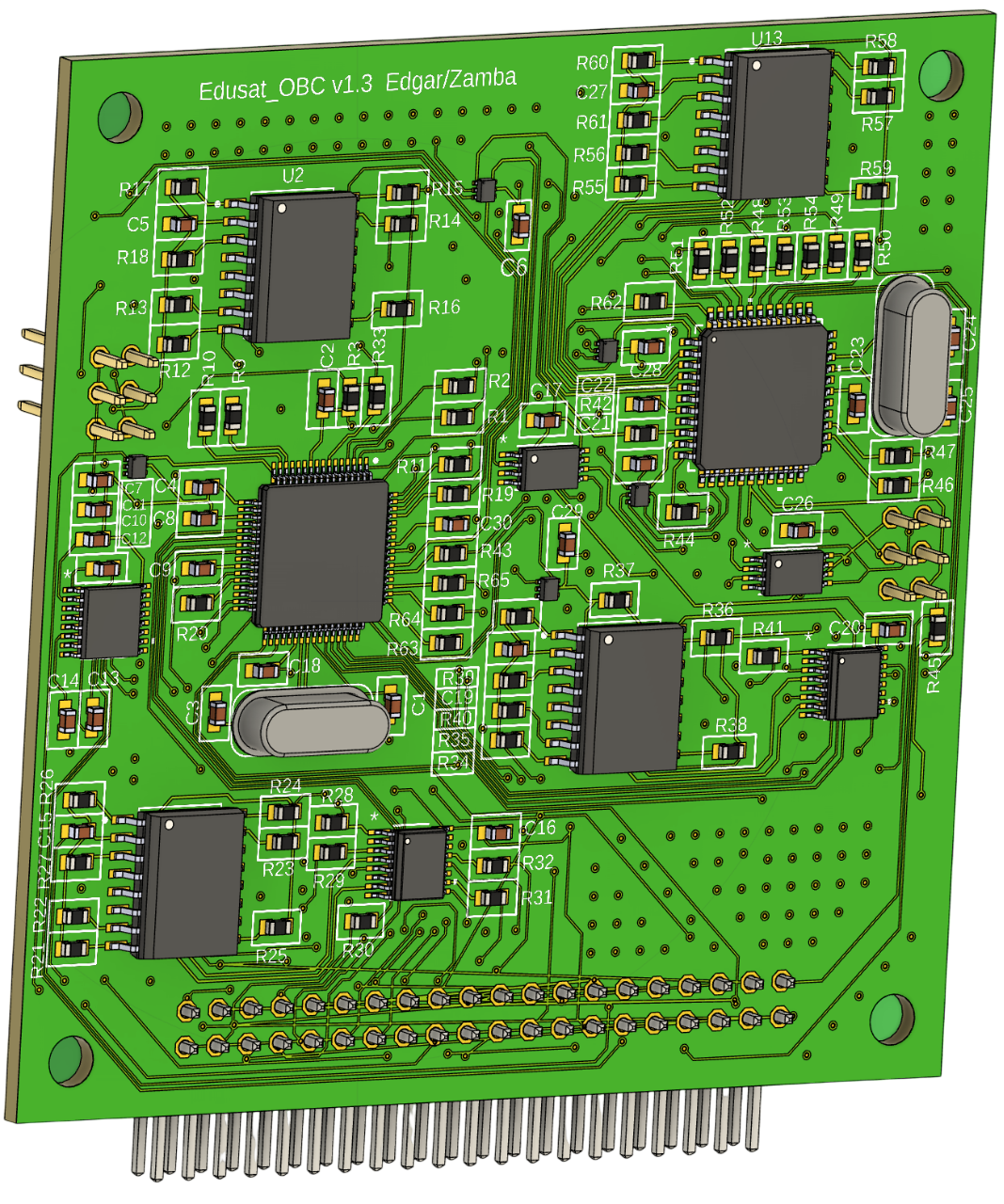
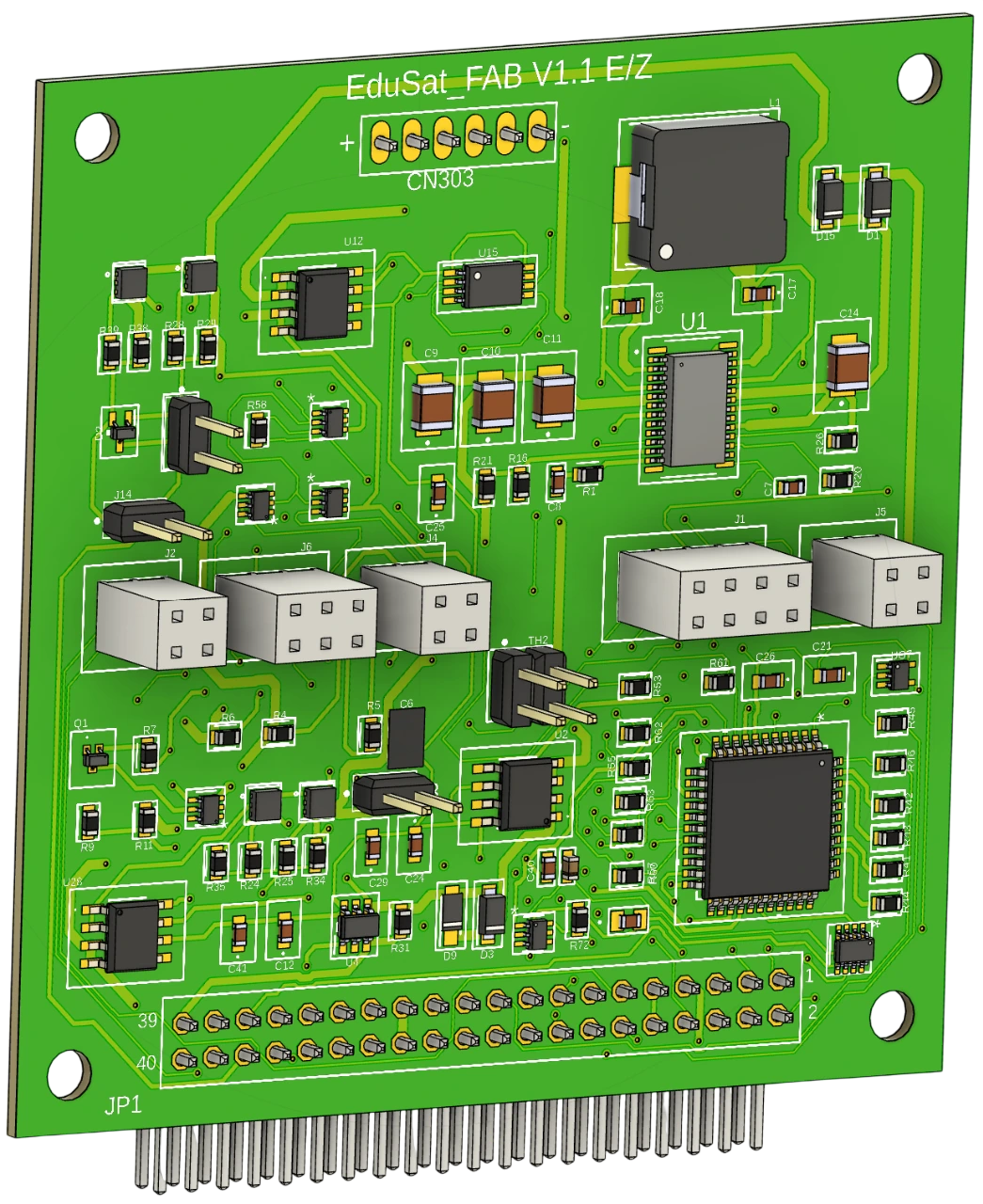
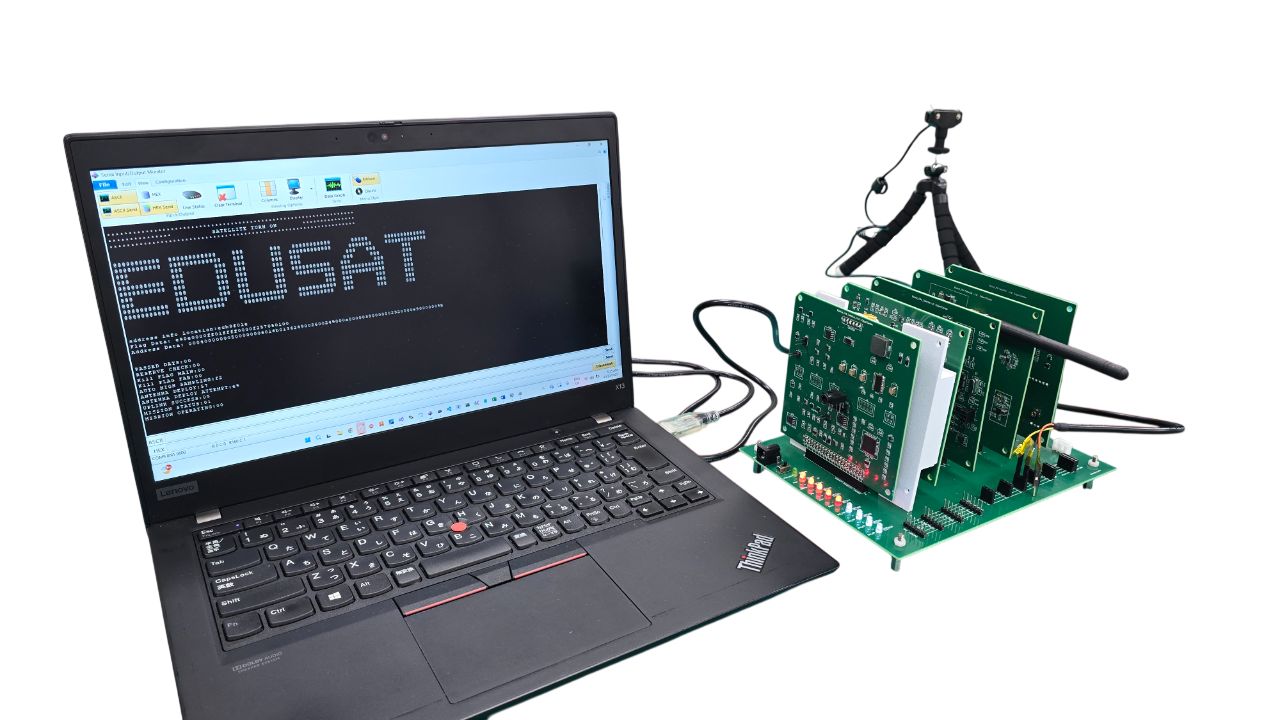
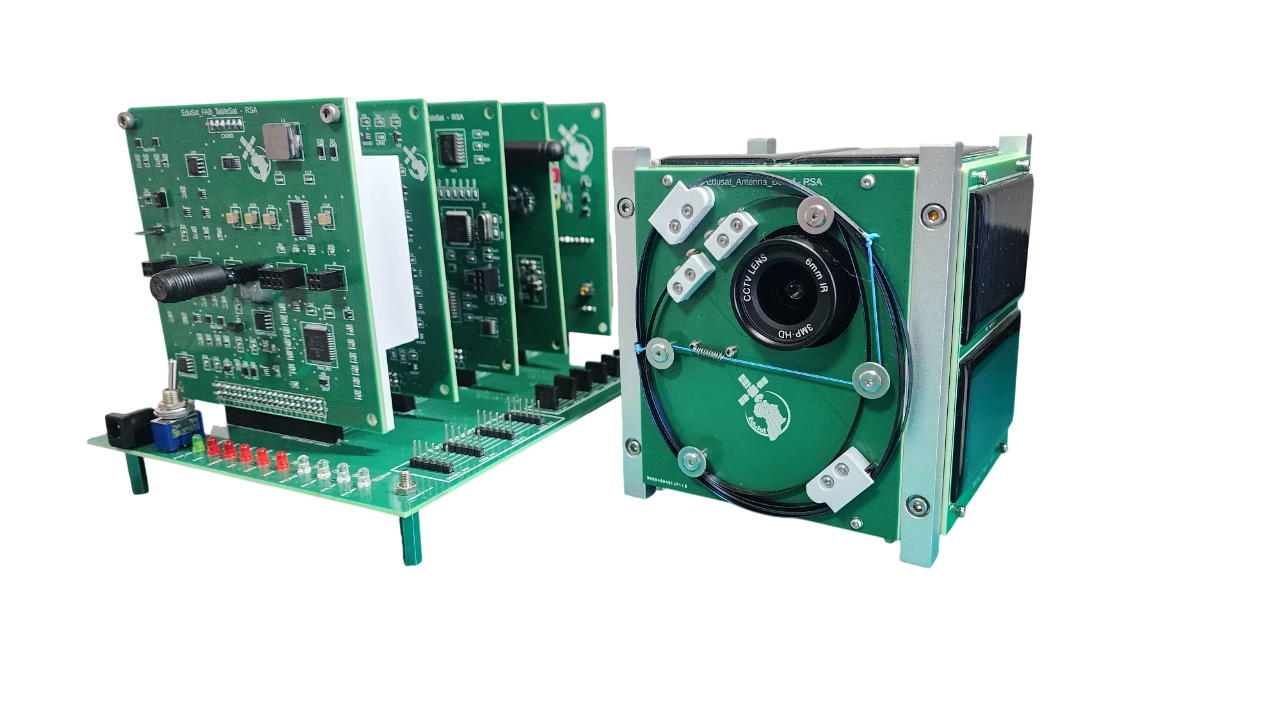
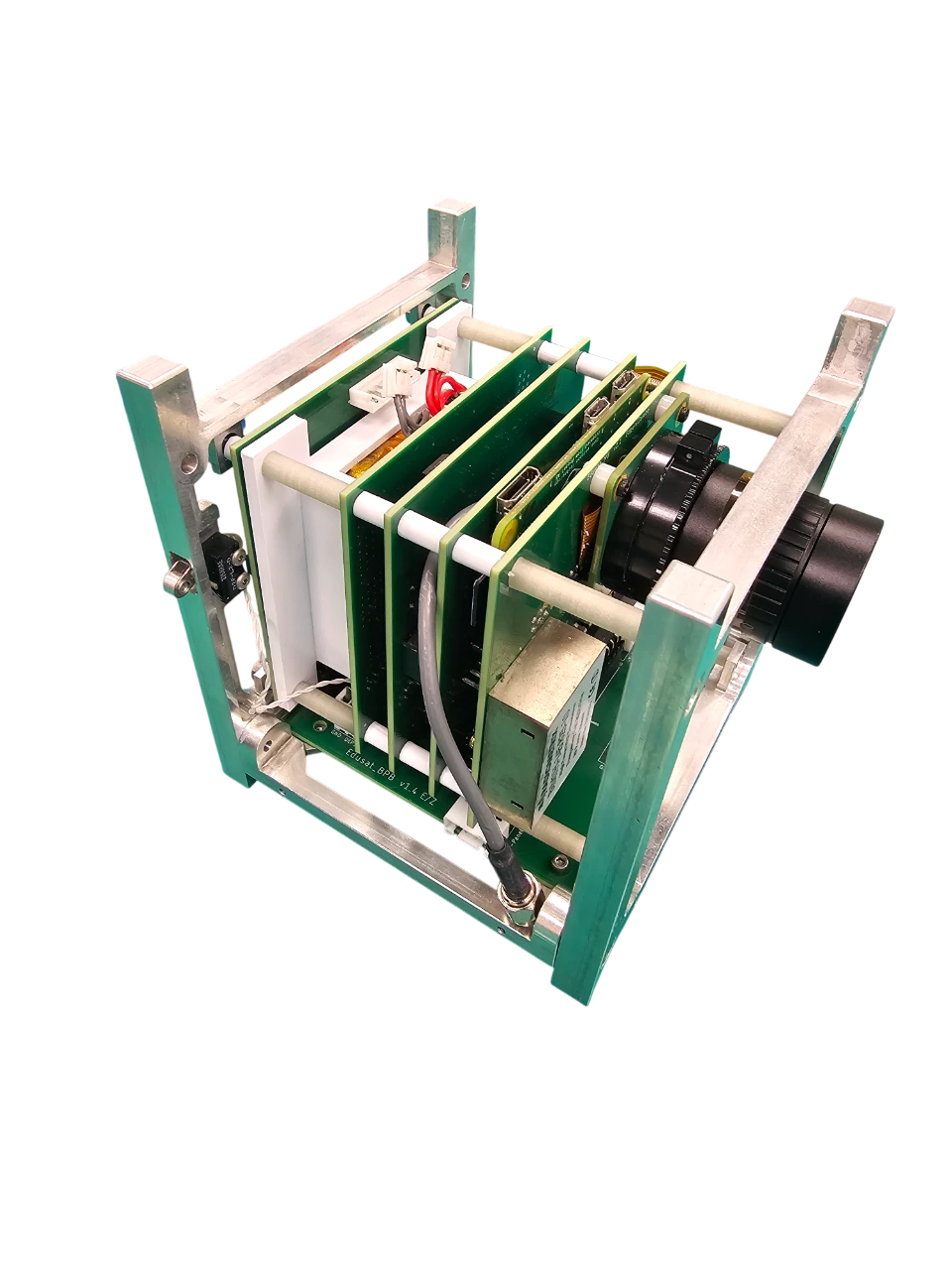
The system is built around a stackable CubeSat bus architecture composed of subsystem boards such as an Electrical Power System (EPS),
On-Board Computer (OBC), UHF/VHF communications subsystem (COM), payload interface modules, and a backplane architecture for subsystem interconnectivity.
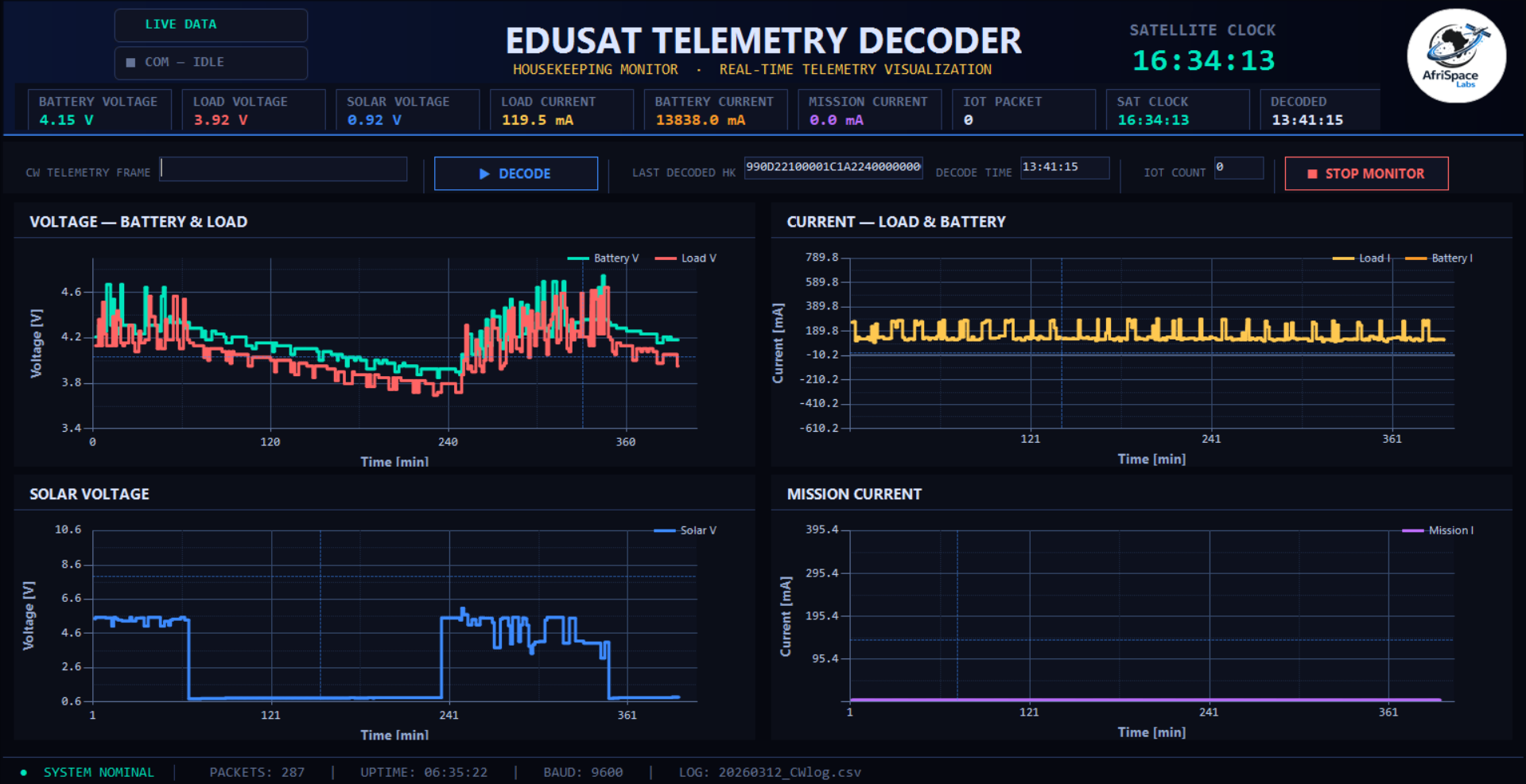
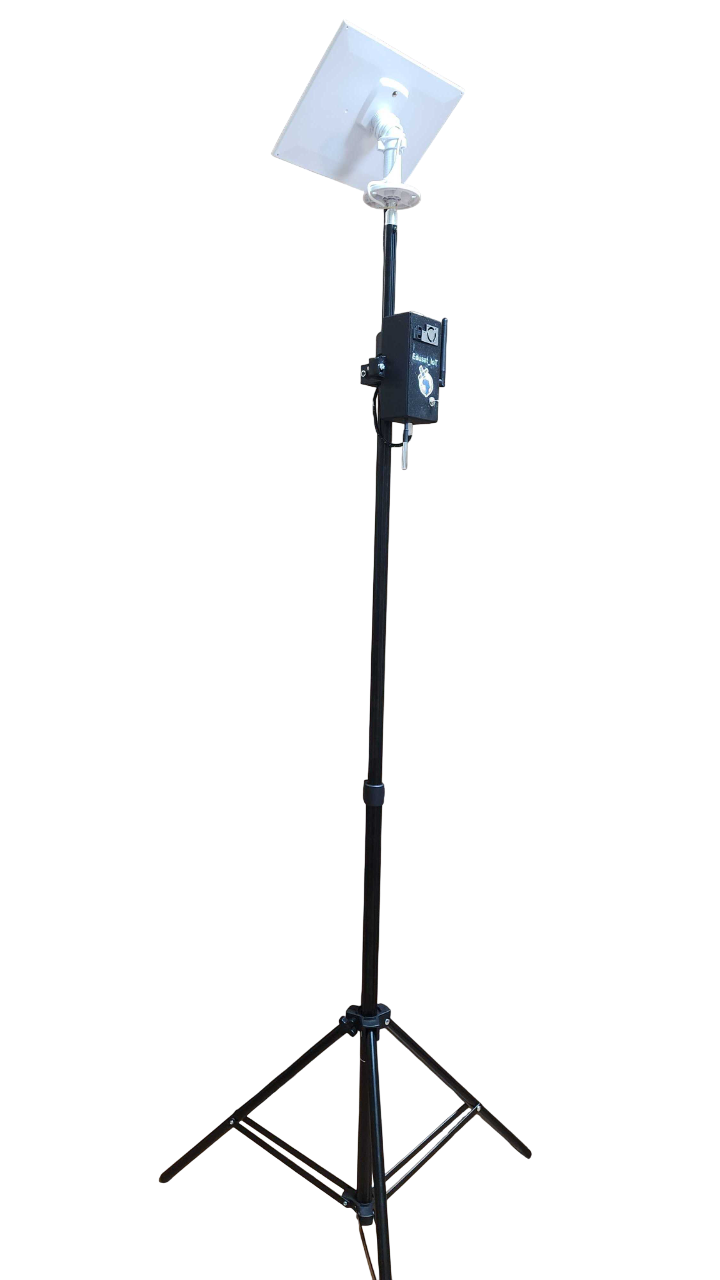
EduSat enables subsystem-level testing, embedded firmware reconfiguration, RF link validation, telemetry and telecommand workflow training,
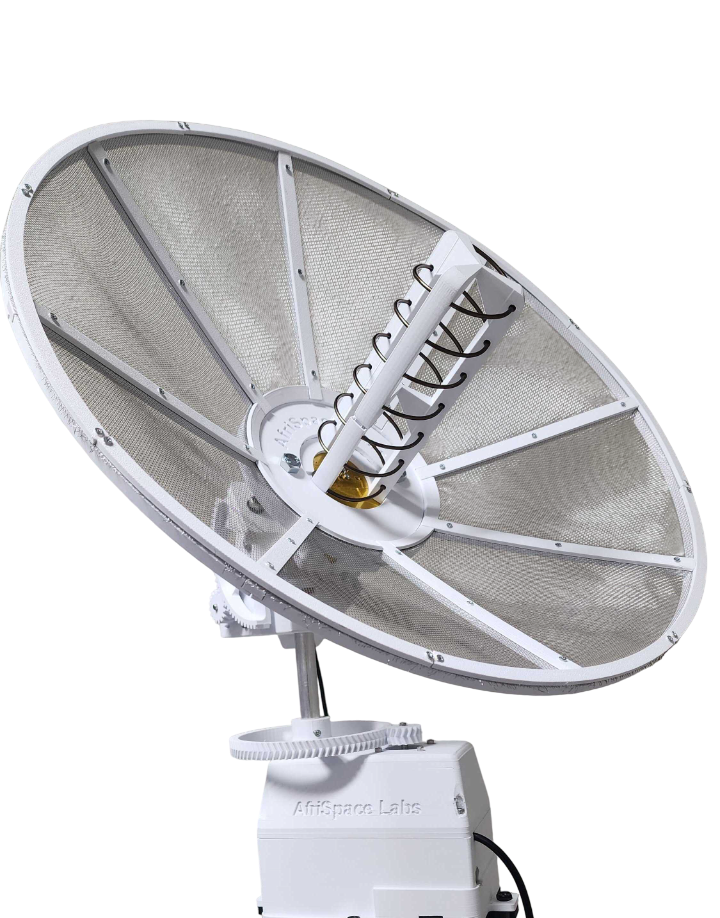
and full ground segment integration using SDR-based ground stations and mission software tools.
Core Offerings & Achievements
Subsystem integration, documentation discipline, and mission-ready engineering
Modular CubeSat Kit
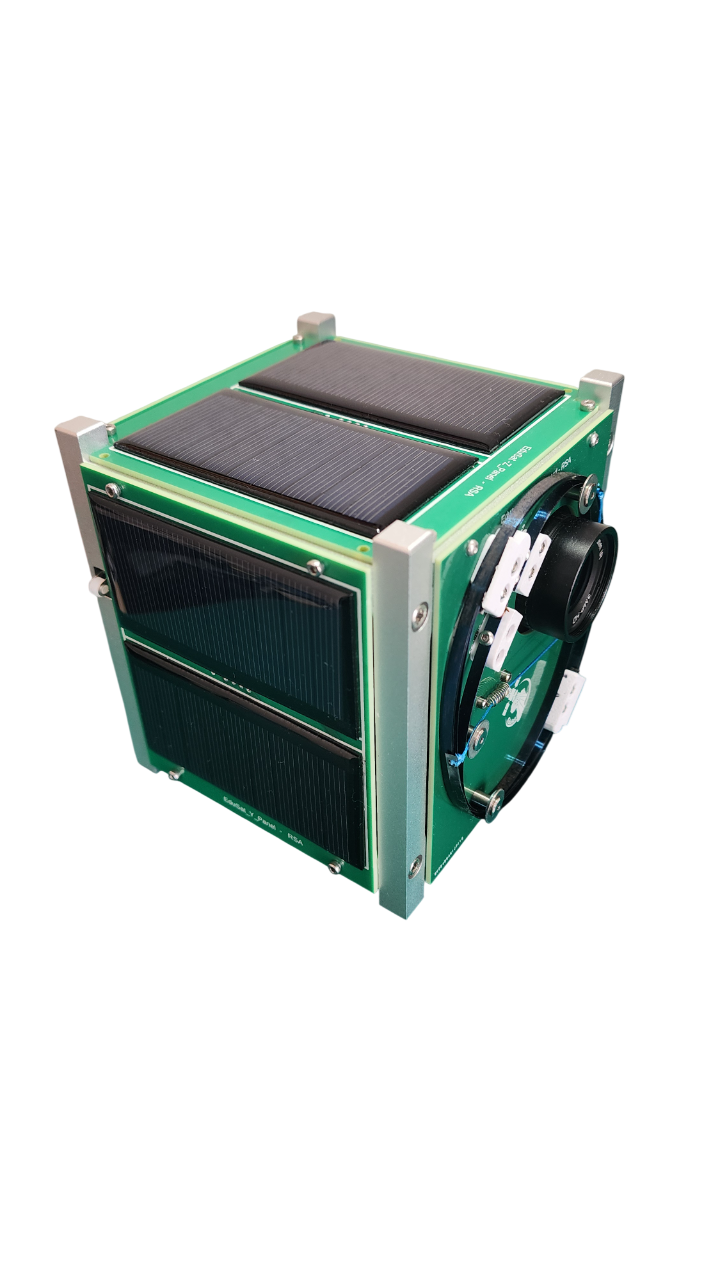
Designed and validated modular 1U CubeSat engineering models featuring swappable subsystem boards for EPS, COM, OBC, and payload modules.
The architecture supports rapid prototyping, debugging, interface validation, and iterative design verification while maintaining flight-representative constraints.
Training Curriculum
A structured multi-phase engineering curriculum covering mission concept development, subsystem architecture, PCB-level hardware understanding,
embedded firmware workflows, RF configuration and link verification, system integration, verification planning, and operations simulation.
Subsystem Documentation
Detailed subsystem documentation including schematics, interface definitions, telemetry protocols, firmware architecture,
and operational procedures—aligned with aerospace documentation practice for repeatable learning, debugging, and configuration control.
Technology Readiness & Scalability
Progressive maturation from education to operational missions
EduSat is engineered for progressive technology maturation. Institutions can deploy Engineering Model (EM) configurations for education,
subsystem validation, and integration training, while maintaining a roadmap toward Qualification Model (QM) testing and future Flight Model (FM)
mission readiness—without redesigning the core bus architecture.
Ground Segment & Mission Operations
End-to-end TT&C training using SDR-based ground stations
EduSat integrates SDR-enabled ground stations into the platform, enabling real-time telemetry reception, Doppler-aware tracking,
RF configuration exercises, telemetry decoding, and mission operations workflows. This ensures students gain full-stack exposure
from spacecraft bus integration to ground terminal operation and data interpretation.
Why EduSat Matters
Building Africa’s next generation of satellite engineers
Satellite technologies enable agriculture analytics, environmental monitoring, connectivity, and disaster response.
EduSat prepares African engineers to design indigenous missions by teaching subsystem engineering, integration discipline,
and operations readiness—strengthening local innovation ecosystems through practical satellite education.
Vision 2025–2030
Scaling African CubeSat capability
200+ Engineers Trained
Train subsystem-capable mission designers, integrators, and operations engineers across Africa.
Institutional Partnerships
Establish CubeSat laboratories and training pipelines across universities and agencies.
Innovation Ecosystems
Accelerate Africa’s NewSpace economy through accessible hardware, documentation, and mentorship.
Join the EduSat Movement
Partner with us to advance African space engineering